In short
- The evil eye is the belief that an envious look, or even too much praise, can bring harm to whoever or whatever is looked at, often without the looker meaning it.
- Greek and Roman writers such as Plutarch and Pliny wrote about it nearly 2,000 years ago.
- The Turkish nazar bead is glass, coloured blue with cobalt or copper, and still made by hand in villages near İzmir.
- The evil-eye colour-meaning charts shared online are a recent invention; no scholarly or museum source backs them.
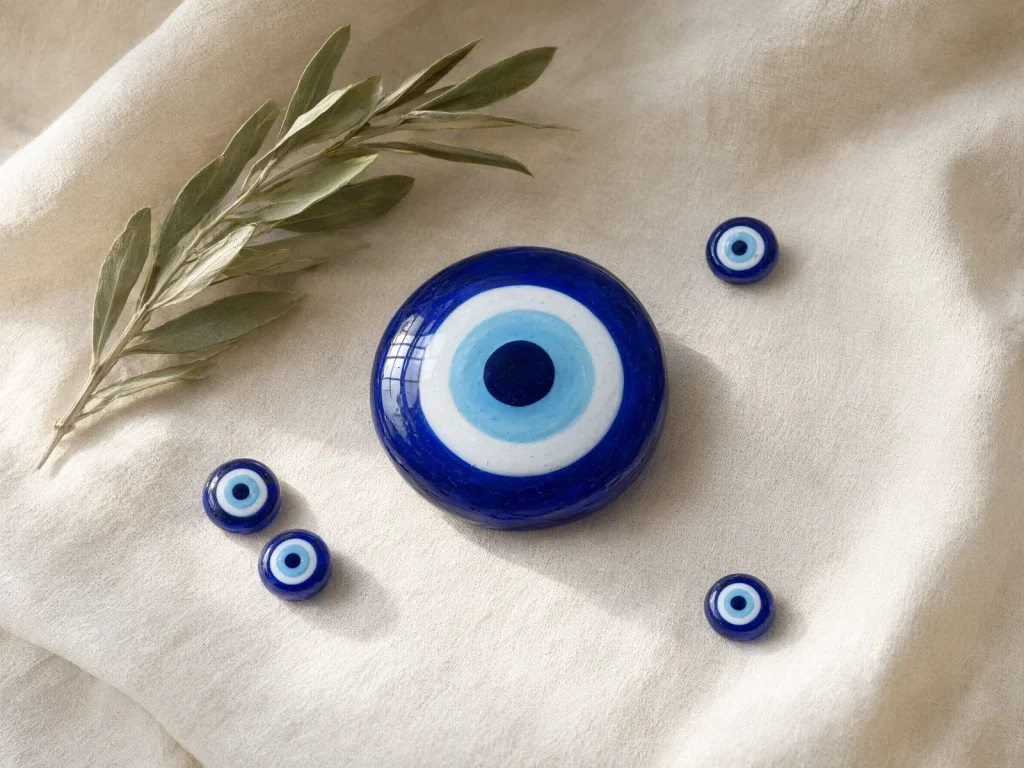
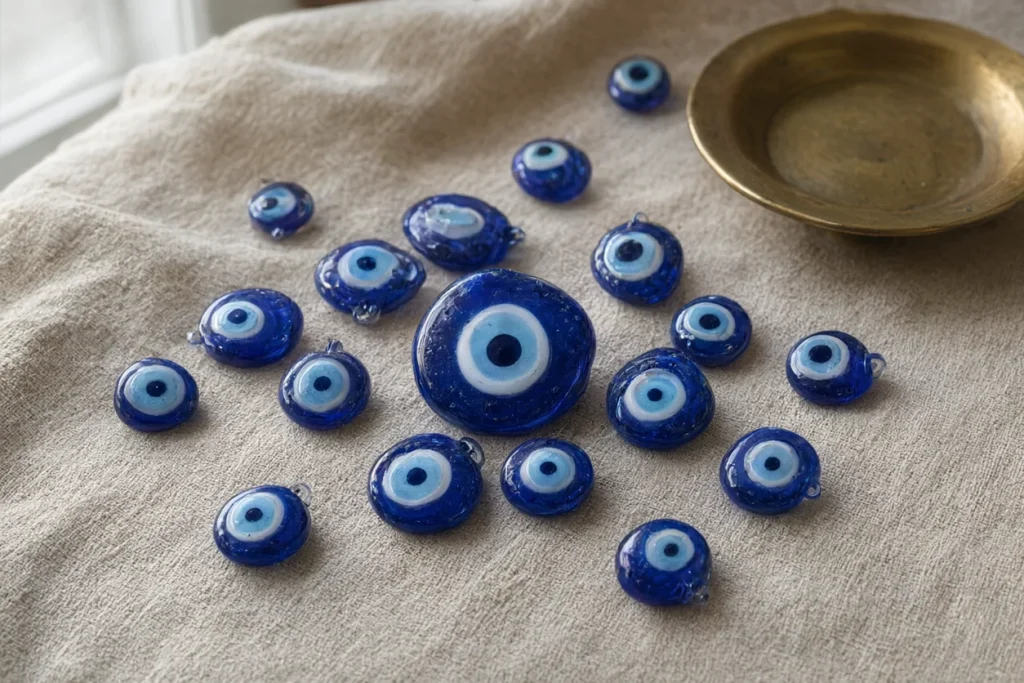
A dark blue eye set in rings of white and pale blue turns up all over Turkey and Greece: in homes, in cars and on wrists. The Thai name, ta pisat, means “devil’s eye”, but the belief behind it is about the gaze of ordinary people, and it can be traced back further than most people realise.
What the evil eye is
The evil eye is the belief that a look can hurt, above all an envious one. Oxford’s Pitt Rivers Museum explains that it is often cast without the looker intending it, and can be set off by praise as well as by envy. In Turkish folk belief, admiring something too much counts as well.
Each language has its own name. In Greek the evil eye is kako mati and the blue bead a matáki, “little eye”; in Italian it is malocchio; in Arabic, al-ayn. In Turkish the bead is the nazar boncuğu, the “evil-eye bead”.
How old is the belief?
One of the clearest early accounts comes from Plutarch, a Greek writer of the late first century AD. In his Table Talk he explains that envy sends harmful emanations out through the eyes, that small children are the most vulnerable, and that amulets help because their strangeness catches the looker’s gaze first.
In the same century, the Roman writer Pliny the Elder recorded people who could harm cattle or infants simply by praising them or staring at them, and nurses who spat when someone looked at a sleeping baby. The Greeks called this power baskania; the Romans called it fascinum, the root of the English word “fascinate”.
Further back still, there are spells against the evil eye from Old Babylonian Mesopotamia, nearly 4,000 years ago, although scholars disagree about how widespread the belief was at the time. Figures like “6,000 years”, often seen online, have no evidence behind them.
Ancient eye beads weren’t necessarily evil-eye charms
The Metropolitan Museum in New York holds glass eye beads from New Kingdom Egypt, around 1550–1080 BC, in blue, yellow and white glass, and Phoenician and Carthaginian eye beads from roughly the fourth to the first century BC. But the museum’s records don’t say they were used against the evil eye. Eye beads really are ancient; assuming they were the same kind of amulet as the nazar goes beyond the evidence.
How nazar beads are made
Turkish nazars are glass, much of it recycled. The deep blue comes from cobalt oxide, or from cheaper copper oxide that bead-makers make themselves by dropping hot copper into water. The glass is melted in clay furnaces fired with pine wood at around 800–1,000°C, and the eye is worked onto each bead by hand. A master can make about a thousand beads a day.
The best-known workshops are near İzmir, in the village of Görece and in Nazarköy, which was called Kurudere until 2007, when it was renamed after its craft. In 2012 the bead-maker Mahmut Sür was named a Living Human Treasure on Turkey’s national list.
Studies of Turkish folklore record nazars pinned to babies’ swaddling or pillows, over front doors, in cars and buses, on animals’ necks and in stables, in vineyards and at the doors of newly opened shops. Bead amulets hung round horses’ necks are recorded as far back as the eleventh century.
Why blue?
The explanation scholars cite most often is that blue eyes were rare in the region and feared, so blue was believed to draw that gaze onto itself or throw it back. A blue eye to fight a blue eye, in other words.
Evil-eye colour meanings: a recent invention
Search for evil-eye colour meanings and you will find charts giving each colour its own power. None of them cite a source, and they contradict each other: yellow means happiness to one shop, success to another and health to a third. We found no scholarly or museum source that assigns colour meanings like this. Old beads did come in several colours, but with no recorded meaning for each.
If you want colour meaning, use your Taksa colours for your birth day instead; at least there are texts to trace them back to. Otherwise, pick the colour you like.
What a cracked bead means
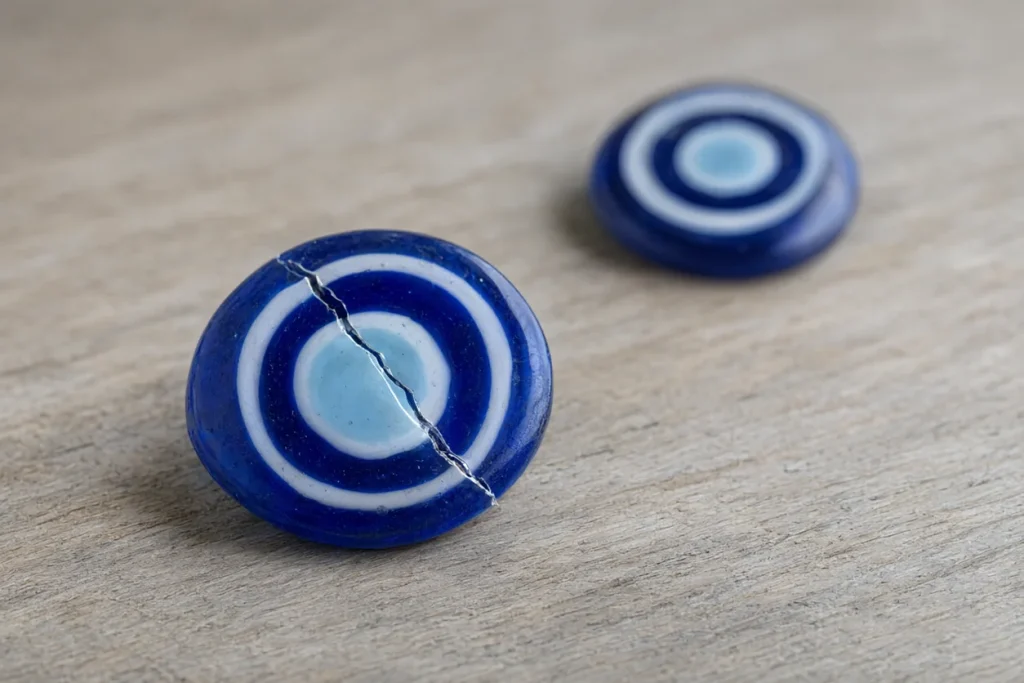
In Turkish belief, a nazar cracks because it has pulled the evil eye onto itself. A broken bead is seen as one that has done its job. Advice about replacing it straight away, or how to throw it out, turns up on modern websites far more than in folklore records.
The evil eye and the hamsa
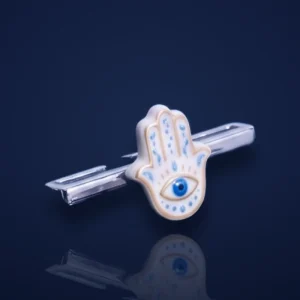
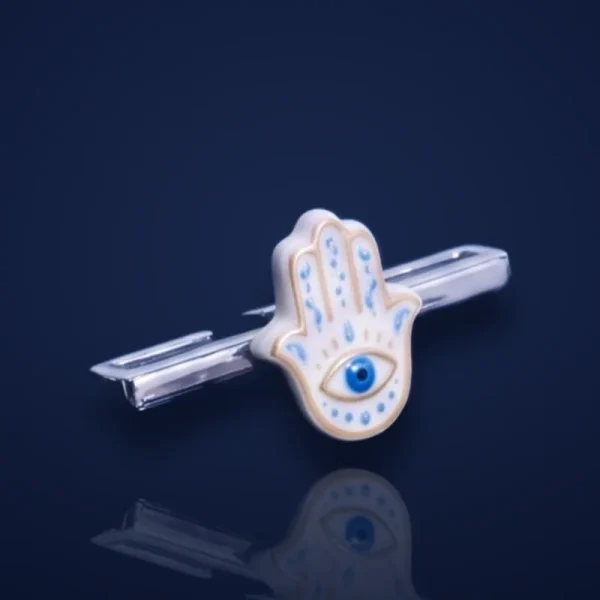
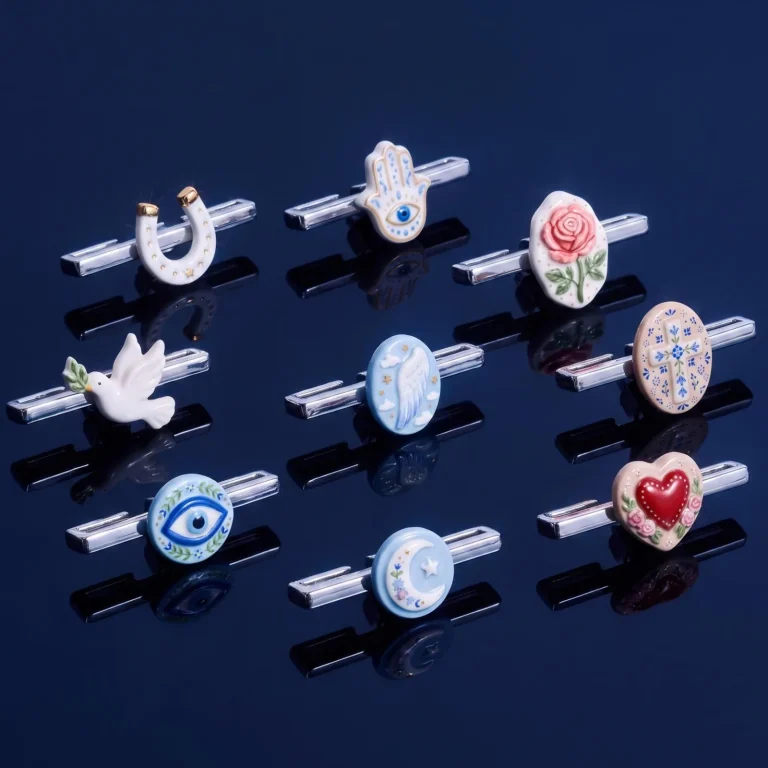
Hamsa, or khamsa, means “five” in Arabic, for the five fingers; it is also called the Hand of Fatima. The British Museum notes that both Muslims and Jews used it against the envious eye, and it is often combined with a blue eye. Our hamsa charm has a blue eye in its palm, which is why it pairs so well with an evil eye.
Religious views
In Islam, a hadith says the evil eye is real, but relying on amulets is against the faith. Turkey’s Directorate of Religious Affairs ruled in 2017 that wearing a nazar bead to seek its protection is not permitted, and recommended reciting the suras al-Falaq and an-Nas instead; the ruling does not address wearing one as decoration. In the Orthodox Church, priests say prayers against the evil eye, and folk magic is forbidden. If you follow a faith closely, ask someone you trust within it.
An evil eye on your band
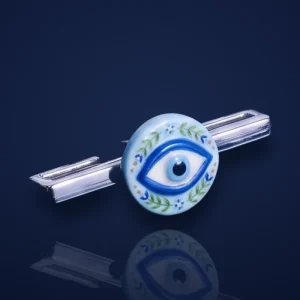
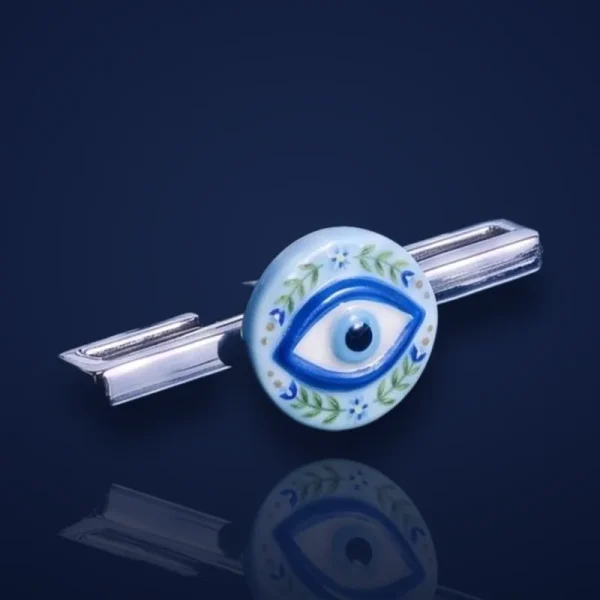
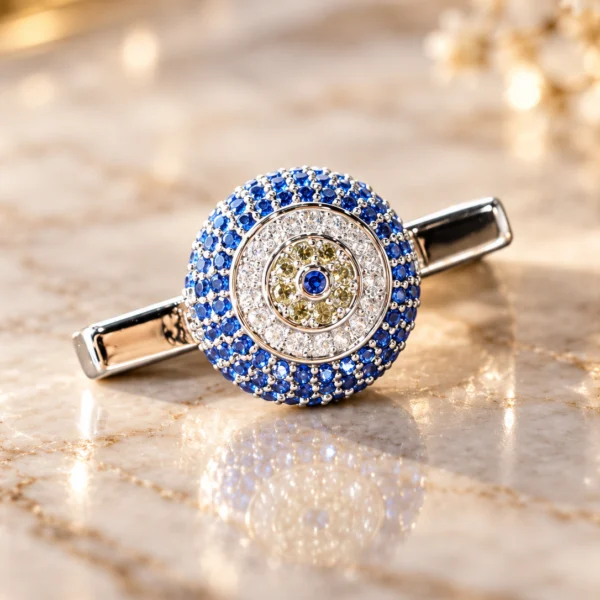
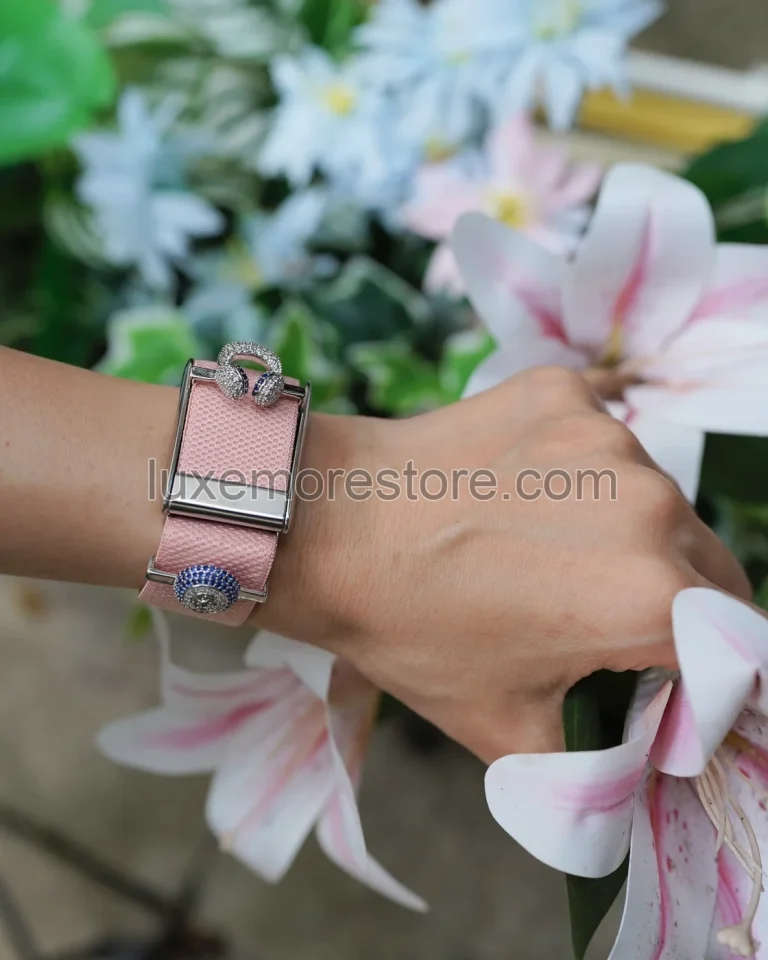
We have two evil eyes. The enamel one is a blue eye framed by green leaves and tiny flowers: warm, and easy to wear every day. The crystal one is round, with a deep blue outer ring giving way to clear crystal, turquoise and a black centre. It catches the light, for days when you want your wrist to look dressier.
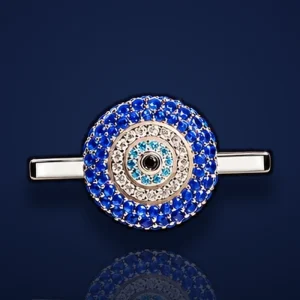
Keep the crystal charm away from perfume and sprays and don’t soak it; take the enamel one off before showering or swimming.
Sources
- Pitt Rivers Museum: Amulets and the evil eye
- Plutarch, Table Talk 5.7 (Perseus Digital Library)
- Pliny the Elder, Natural History 28.7 (Perseus Digital Library)
- The Met: glass eye beads, New Kingdom Egypt
- Research on nazar bead making in Turkey (DergiPark, Turkish)
- Visit İzmir: Nazarköy
- Anadolu Agency: nazar master Mahmut Sür (Turkish)
- British Museum: hamsa amulet
- Diyanet: ruling on wearing nazar beads (2017, Turkish)