In short
- There is no study of MBTI and WHOOP as such; this piece reads each letter pair through the Big Five trait it overlaps with.
- J and N: studies of fitness-app users found conscientious and open people log more data and feel better wearing their device.
- E leans towards the social features, F towards comparing and cheering friends on, and I wants more privacy.
- Matching the band to the outfit is almost everyone’s thing: design is the top reason people choose a smartwatch.
- MBTI can’t tell you who will be stressed by the numbers: no letter measures neuroticism.
Four wrists, the same WHOOP, four completely different ways of using it. One checks Recovery before getting out of bed. One changes the band to match the outfit every morning. One screenshots their sleep score for the group chat. And one wears it under a sleeve and has never mentioned it to anyone.
Which MBTI type is which? The honest answer is that nobody has studied it. But there is an indirect route that holds up reasonably well, and this piece follows it step by step.
First: what MBTI can and can’t tell you
MBTI sorts people into 16 types from four letter pairs, but most psychologists don’t use it to measure personality. Pittenger (2005) warns that great caution is needed when drawing conclusions from the four-letter code. What the questionnaire really measures are continuous scores, so plenty of people sit close to the dividing line, and taking it again can flip a letter.
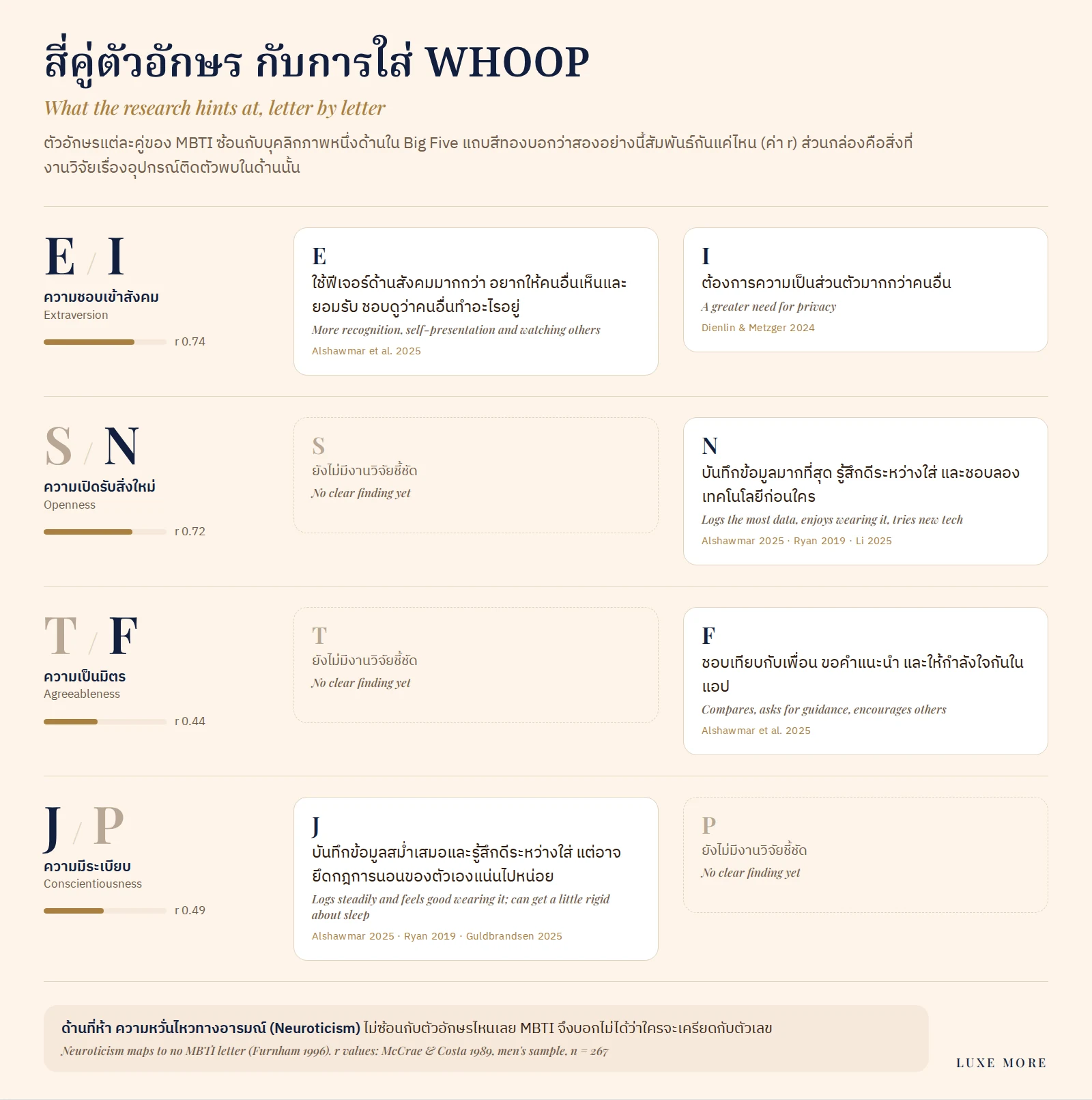
The useful part: each letter pair overlaps with one of the Big Five traits researchers use widely. McCrae and Costa (1989) found that E–I overlaps with extraversion, S–N with openness, T–F with agreeableness and J–P with conscientiousness. The wearable studies we found all use the Big Five, so we read letter by letter rather than type by type.
The fifth trait, neuroticism, doesn’t line up with any letter (Furnham, 1996). That matters later on.
J: Recovery first thing every morning
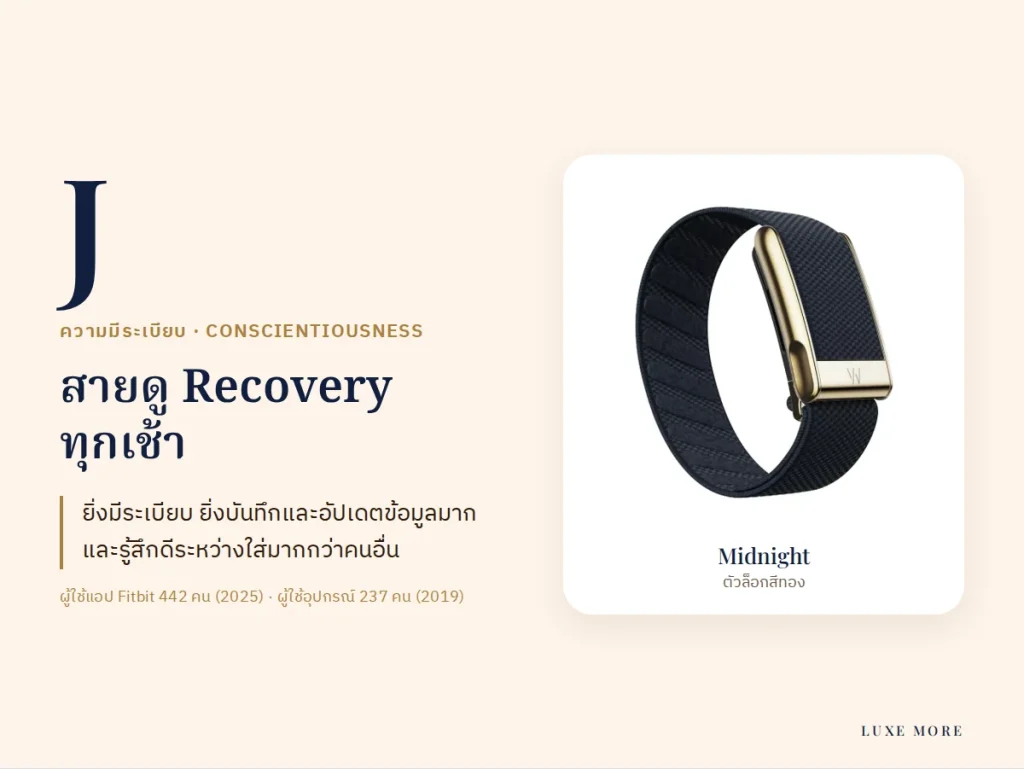
Conscientiousness has the most research behind it. Among 442 Fitbit app users, the more conscientious logged and updated their data more (Alshawmar et al., 2025). Among 237 tracker users in Australia, they also felt better while wearing their device than others did (Ryan et al., 2019).
WHOOP suits this habit well. The device has no screen and everything lives in the app, Recovery, Strain and sleep, so opening it with the first coffee soon becomes routine.
The thing to watch is rigidity. A 2025 study of sleep preoccupation found that highly conscientious people hold slightly more tightly to their own sleep rules (Guldbrandsen et al., 2025). On a day when the numbers look bad, look at the whole week’s trend before you think about changing your routine.
P doesn’t mean WHOOP isn’t for you. Read the research the other way round and this group may not open the app every morning; wearing it and checking in when curious is simply another way to use it.
N: the one who tries everything new
In the same Fitbit study, openness was linked to logging data even more strongly than conscientiousness (β 0.23 against 0.14). Open people also felt better while wearing their device (Ryan et al., 2019), and among 668 adults over fifty with type 2 diabetes, openness went hand in hand with being quick to try new technology (Li et al., 2025).
It’s a fair guess that N types want to try every new feature and every new band colour, though nobody has measured the second part. S types may find the one band they love and stay with it; that’s a guess too.
The stylist who changes bands every morning: which type?
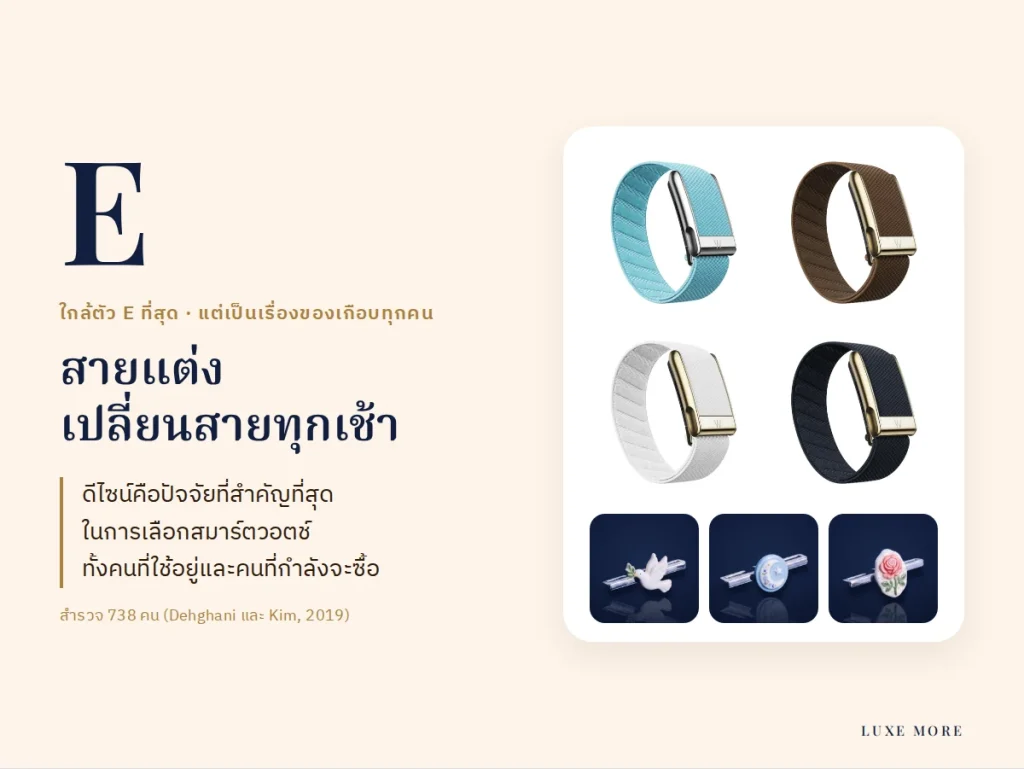
This one has the most interesting answer. One group of researchers calls smartwatches “fashnology”, fashion and technology in one object (Chuah et al., 2016). In a survey of 738 smartwatch users and would-be users, design aesthetics was the most important factor for both groups, and it weighed more with women than with men (Dehghani & Kim, 2019). Matching the band to the outfit is almost everyone’s thing, not one type’s.
If we had to pick a letter, E comes closest. Among 999 people without a smartwatch, the more extraverted put more weight on what the device says about them (Krey et al., 2019). WHOOP itself has no screen, so the band is all anyone else sees, and WHOOP 5.0 and MG use a sliding clasp WHOOP designed for quick band changes.
E and F: the sharer and the cheerleader
In the same Fitbit study, extraverts used the social side of the app more: recognition, showing themselves, watching others. Agreeableness, the F side, leans towards comparing, asking for guidance and encouraging each other (Alshawmar et al., 2025). In WHOOP that’s Teams, with leaderboards for members’ Strain, Recovery and sleep.
One thing people often guess wrong: those who post about workouts a lot aren’t necessarily extraverts. A study of 555 Facebook users found narcissism predicted it, while extraverts posted more about social activities and everyday life (Marshall et al., 2015).
Read the other way round, T types may care more about their own graph than the team leaderboard.
I: the quiet one who tells no one
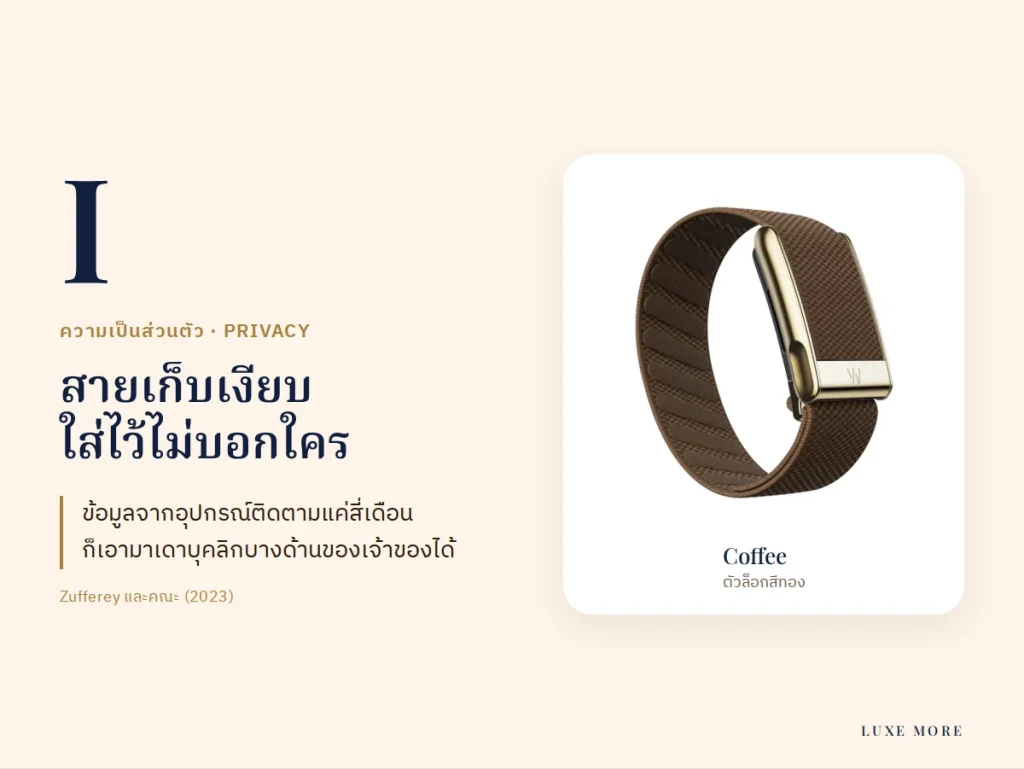
A survey of 1,550 US adults found extraverted and agreeable people need noticeably less privacy than others (Dienlin & Metzger, 2024). Flip it and I types tend to keep their own things to themselves, with good reason: a study of four months of wearable data found it could be used to guess parts of the wearer’s personality (Zufferey et al., 2023).
WHOOP works well in quiet mode. There’s no screen for anyone to glance at, and according to WHOOP’s guide to Teams you can make your profile unsearchable; your data is only seen once you join a team, and the team owner decides what’s shared. On a dark band under a sleeve, hardly anyone notices it.
Stressed by the numbers? That’s not a letter
There’s a name for chasing perfect sleep scores from a device: orthosomnia (Baron et al., 2017). MBTI can’t tell you who is prone to it, because neuroticism maps to no letter. The sleep-preoccupation study mentioned under J found people high in neuroticism let sleep worries interfere with daily life more (Guldbrandsen et al., 2025).
The good news: in the Australian study, most felt more positive than negative while wearing their device, and people high in neuroticism didn’t feel worse than others (Ryan et al., 2019). If the numbers start to worry you, look only at the weekly average and let the daily ones go.
Style by type: a fun idea, not a finding
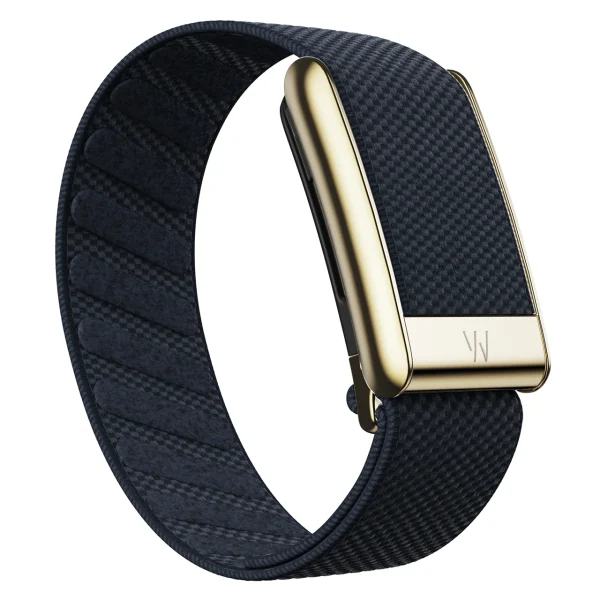
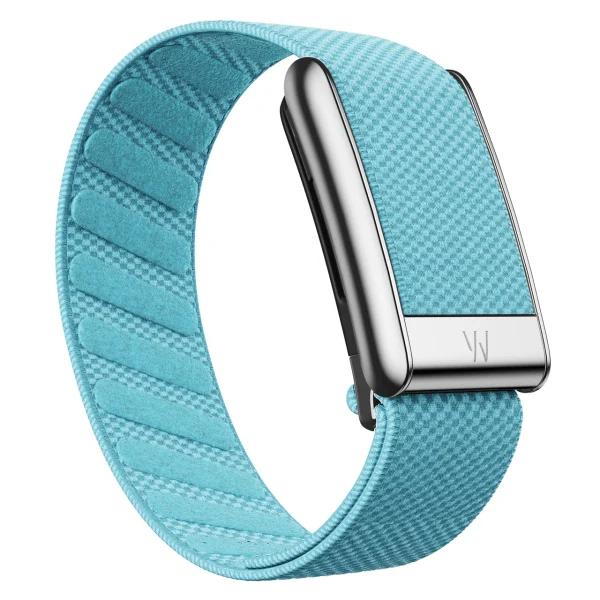
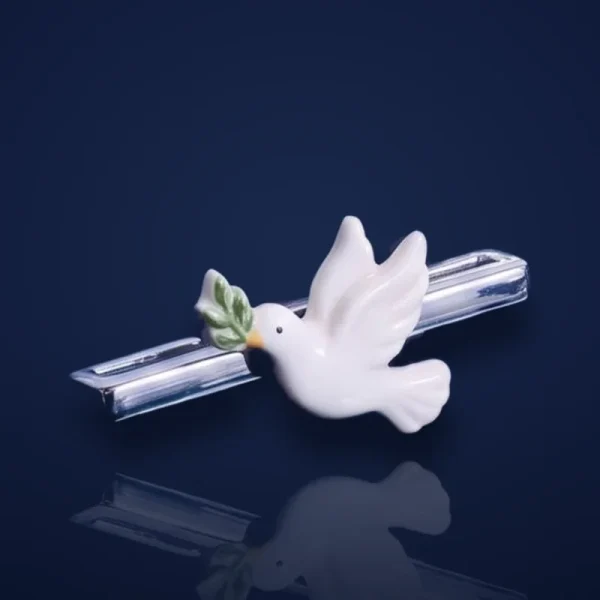
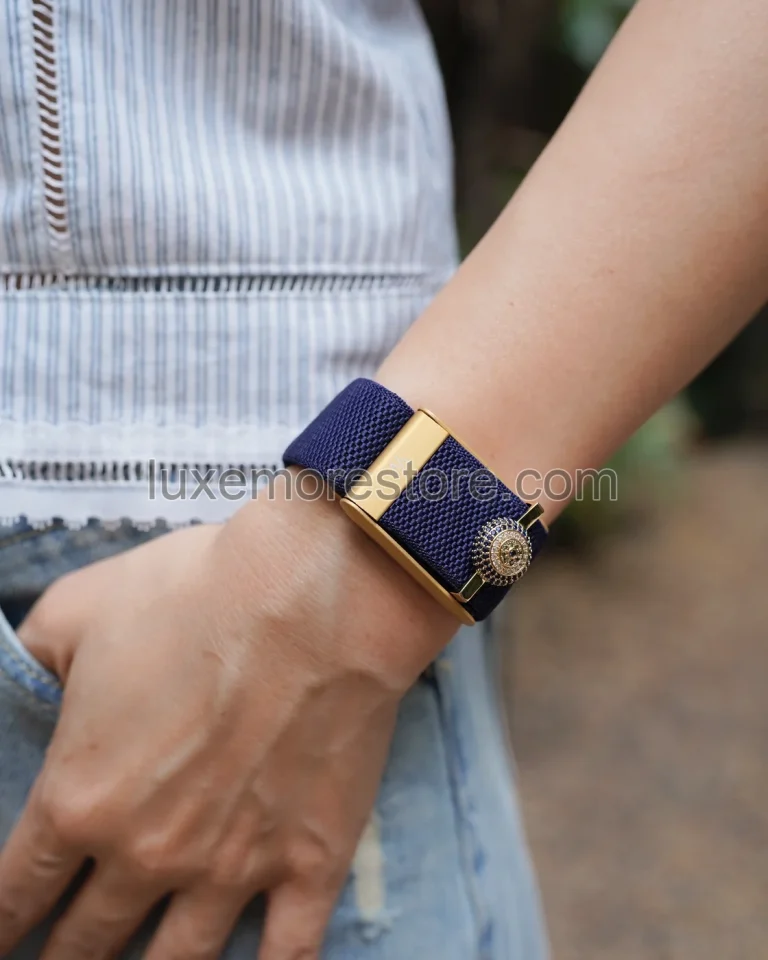
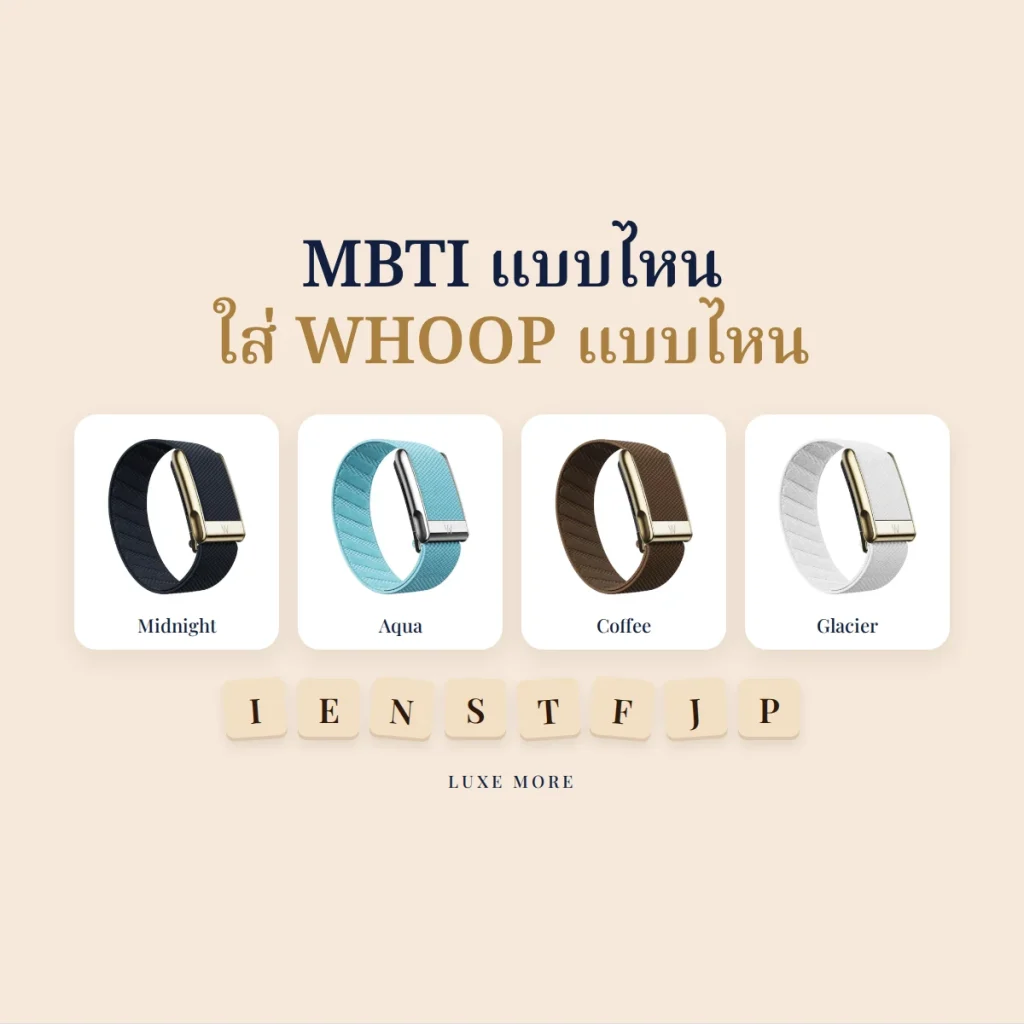
This part is our own idea, with no research behind it. We paired the four type groups with four band colours: Midnight, a calm navy, for NT; Aqua with titanium hardware for NF; Coffee, an everyday brown, for SJ; and Glacier, a white that stands out against almost any colour, for SP. Then each type gets one charm for what its symbol stands for.
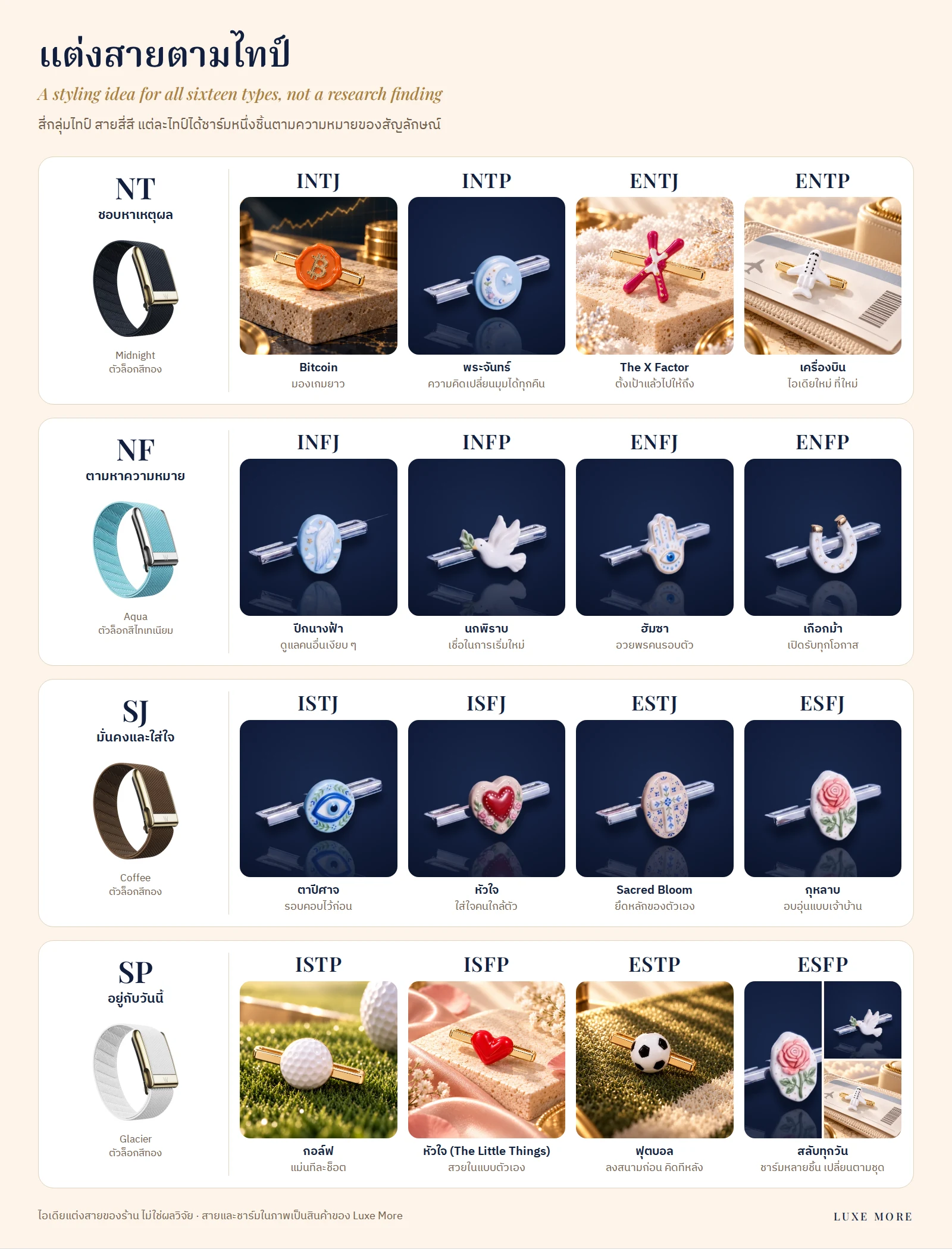
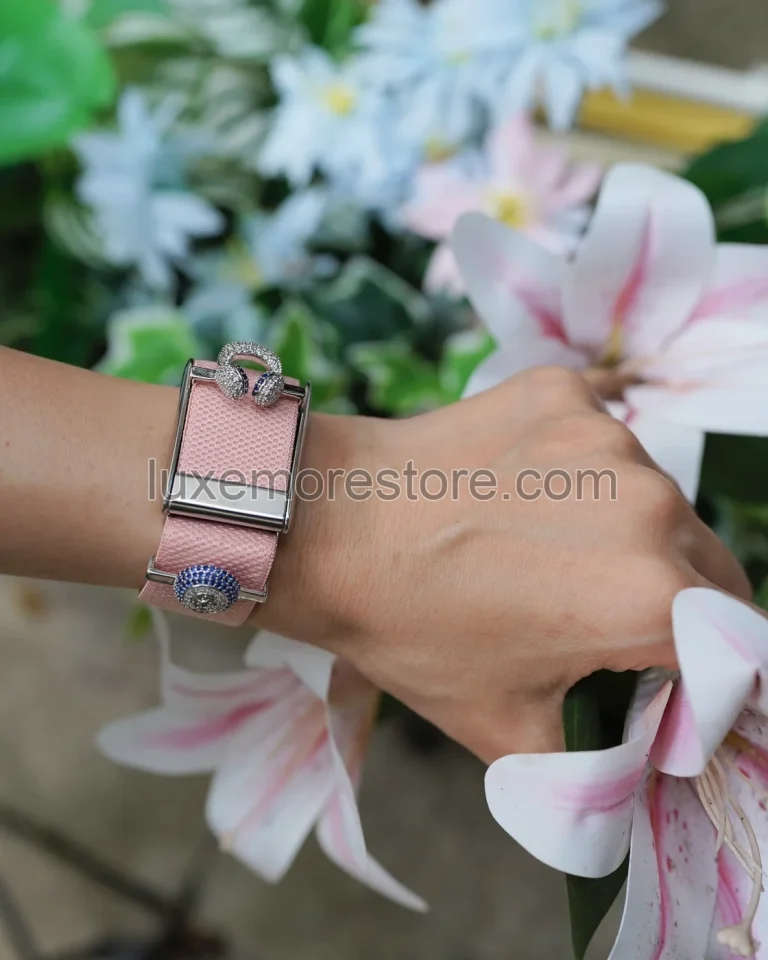
The bands shown are third-party SuperKnit Luxe bands and fit both WHOOP 5.0 and WHOOP MG, but on MG they won’t take ECG readings: ECG needs WHOOP’s own MG bands. Every charm slides onto a fabric band by hand, no tools needed.
Frequently asked questions
How reliable is MBTI?
Fine for fun or self-reflection, but not for anything serious. Researchers mainly measure personality with the Big Five, and your MBTI letters can change when you retake the test.
Which type suits WHOOP best?
None suits it more than another. The research only says people use it differently: some read the data every morning, some like Teams, some just wear it quietly. Each is its own way of using WHOOP.
Can I wear several charms on one band?
Yes, line up several on one band, or wear just one for a clean look and change it every day like an ESFP.
Sources
- McCrae & Costa (1989), reinterpreting the MBTI through the five-factor model
- Furnham (1996), the Big Five versus the big four
- Pittenger (2005), cautionary comments regarding the MBTI
- Alshawmar et al. (2025), personality and Fitbit app use
- Ryan, Edney & Maher (2019), feelings while wearing activity trackers
- Li, Chen & Sun (2025), personality and wearable use in older adults
- Chuah et al. (2016), smartwatches as fashnology
- Dehghani & Kim (2019), design aesthetics and smartwatch adoption
- Krey et al. (2019), the symbolic value of smartwatches
- Marshall, Lefringhausen & Ferenczi (2015), personality and Facebook status topics
- Dienlin & Metzger (2024), personality and the need for privacy
- Zufferey et al. (2023), inferring personality from fitness-tracker data
- Baron et al. (2017), orthosomnia
- Guldbrandsen et al. (2025), the Bergen Orthosomnia Scale and personality
- WHOOP: the WHOOP difference (screen-free design)
- WHOOP Support: changing bands with the Fast Link Slider
- WHOOP: joining and creating Teams